
India boasts a rich history of scientific genius whose work spans centuries and disciplines, transforming global knowledge. This detailed blog celebrates ten of the greatest Indian scientists, exploring their groundbreaking achievements, impact, and inspiring stories.
1. C.V. Raman – Discoverer of the Raman Effect
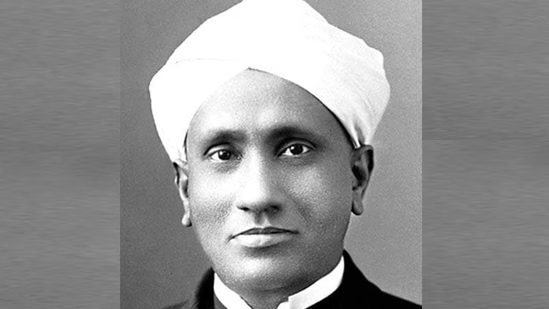
Sir Chandrasekhara Venkata Raman’s historic discovery of the Raman Effect in 1928 revolutionized the understanding of light scattering. While studying the interaction of light with molecules, Raman observed a shift in the wavelength of scattered light, revealing insights into molecular energy states. This discovery won him the Nobel Prize in Physics in 1930, making him the first Asian Nobel laureate in science. Raman’s work laid the foundation for modern spectroscopy, aiding fields from chemistry to medical diagnostics.
Major Contributions:
- Discovery of Raman Effect
- Applications in physics, chemistry, and materials science
2. Homi Jehangir Bhabha – Architect of India’s Nuclear Program
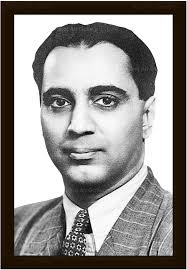
Dr. Homi J. Bhabha was a visionary physicist whose leadership paved the way for India’s nuclear capabilities. Born in 1909, he was instrumental in founding the Tata Institute of Fundamental Research and the Bhabha Atomic Research Centre (BARC). Bhabha’s pioneering efforts established India’s first atomic reactors and nuclear research infrastructure, crucial for energy, medicine, and defense applications.
Major Contributions:
- Establishment of India’s nuclear program
- Development of nuclear reactors and research institutions
3. A.P.J. Abdul Kalam – Missile Man and People’s President
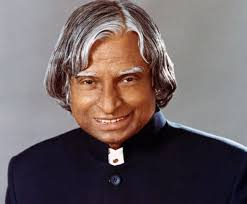
Dr. A.P.J. Abdul Kalam played a critical role in India’s space and missile programs. As a lead scientist at ISRO and DRDO, he contributed to the development of SLV-III (India’s first satellite launch vehicle) and indigenous ballistic missiles like Agni and Prithvi. Beyond science, Kalam inspired millions as India’s 11th President, championing education and innovation.
Major Contributions:
- Development of space launch vehicles
- Indigenous missile technology
4. Vikram Sarabhai – Father of Indian Space Program
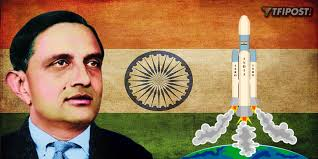
Dr. Vikram Sarabhai’s bold vision gave birth to ISRO and India’s journey into space exploration. He initiated India’s first satellite project, Aryabhata, launched in 1975, marking a major leap in communications, remote sensing, and research. Sarabhai emphasized using space technology to address India’s social and developmental challenges.
Major Contributions:
- Founding ISRO
- Launch of India’s first satellites
5. Jagadish Chandra Bose – Pioneer of Plant Physiology and Wireless Communication
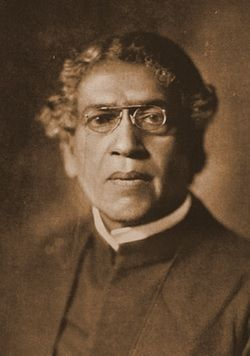
An early polymath, Jagadish Chandra Bose invented the Crescograph, a device that measures plant growth at microscopic levels. He demonstrated plants’ responses to stimuli such as light and sound, pioneering plant neurobiology. Bose also was a pioneer in radio wave research, laying groundwork ahead of many Western scientists.
Major Contributions:
- Invention of Crescograph
- Early wireless communication research
6. Raj Reddy – Artificial Intelligence Visionary

Dr. Dabbala Rajagopal Reddy, an Indian-American computer scientist, is a pioneer in Artificial Intelligence (AI). His advances in speech recognition, robotics, and natural language processing have profoundly influenced AI development. Reddy’s work has applications in healthcare, education, and autonomous systems.
Major Contributions:
- Breakthrough AI algorithms and systems
- Founding leader in speech and robotics research
7. Srinivasa Ramanujan – Mathematics Genius
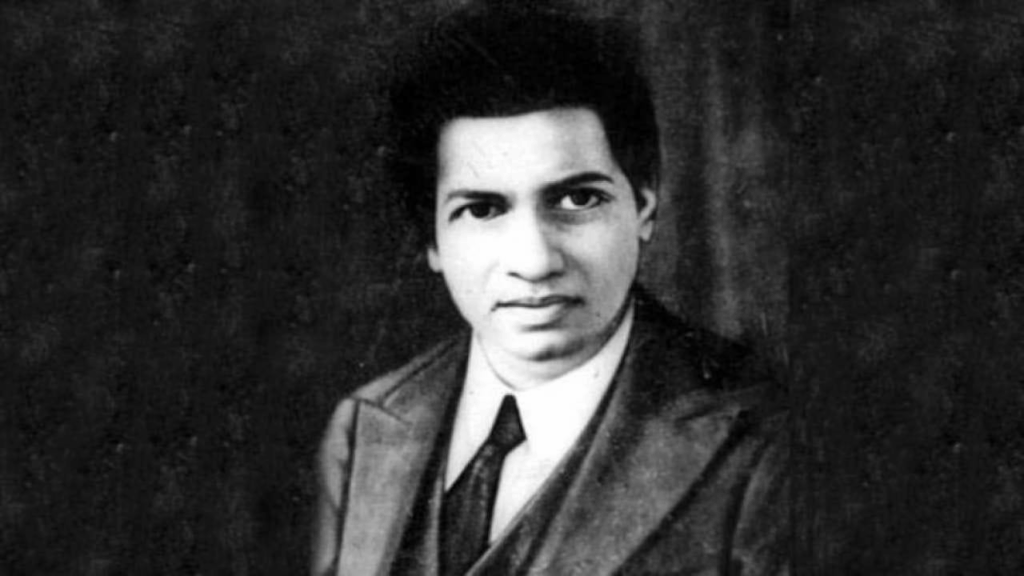
Ramanujan, largely self-taught, unlocked vast new realms in mathematics, particularly in number theory, infinite series, and continued fractions. His unique insights produced many now-famous formulas and identities. His collaboration with G.H. Hardy led to foundational contributions still studied worldwide.
Major Contributions:
- Pioneering mathematical theories and formulas
- Profound impact on number theory and analysis
8. Meghnad Saha – Astrophysics Innovator
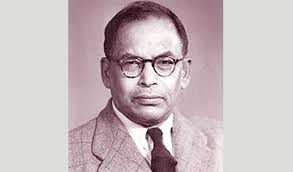
Dr. Meghnad Saha developed the Saha Ionization Equation, crucial for understanding stellar atmospheres and spectra. His equation explains the ionization states of elements in stars, a key concept in astrophysics. Saha’s work helped place India prominently on the map of astronomy research.
Major Contributions:
- Saha Ionization Equation in stellar physics
- Advances in astrophysics and spectral analysis
9. Salim Ali – The Birdman of India
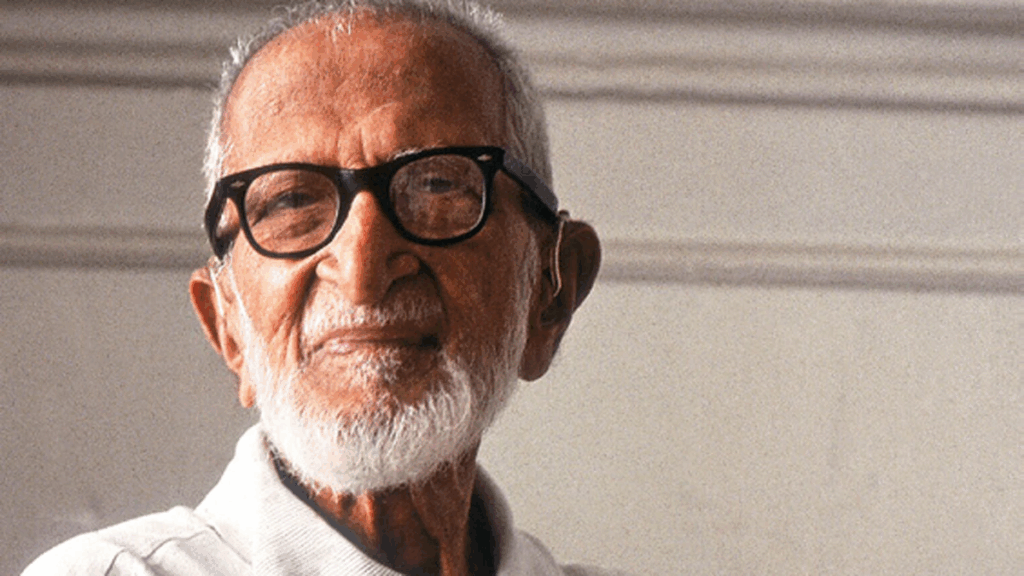
Dr. Salim Ali’s detailed and systematic studies of Indian bird species transformed ornithology and conservation in India. His surveys and writing, including the definitive “Book of Indian Birds,” raised awareness of biodiversity and fueled wildlife protection efforts.
Major Contributions:
- Systematic bird surveys in India
- Influencing conservation policy and awareness
10. Satyendra Nath Bose – Quantum Mechanics Pioneer
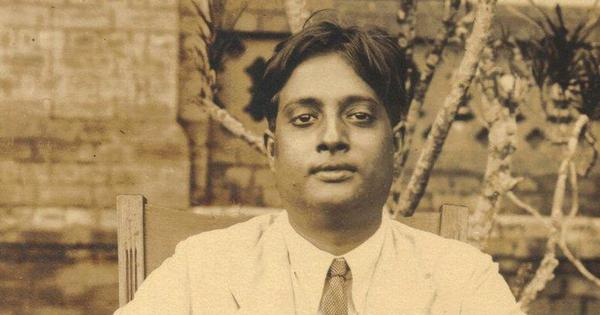
Dr. S.N. Bose collaborated with Albert Einstein to develop Bose-Einstein statistics, which underpin quantum theory relating to particle behavior at very low temperatures. The boson particle type was named after him, playing a key role in modern particle physics and the discovery of the Higgs boson.
Major Contributions:
- Bose-Einstein statistics and quantum theory
- Influence on particle physics
These scientists represent the spirit of inquiry and innovation that defines India’s scientific heritage. Their inventions and theories not only enriched global knowledge but also inspired generations to dream big.